A Surgeon Just Put On a Headset: The AR Operating Room Arrives
The FDA just cleared the first surgical app for Apple Vision Pro. Here is why the surgical cockpit is thrilling, and the one thing it can never get wrong.

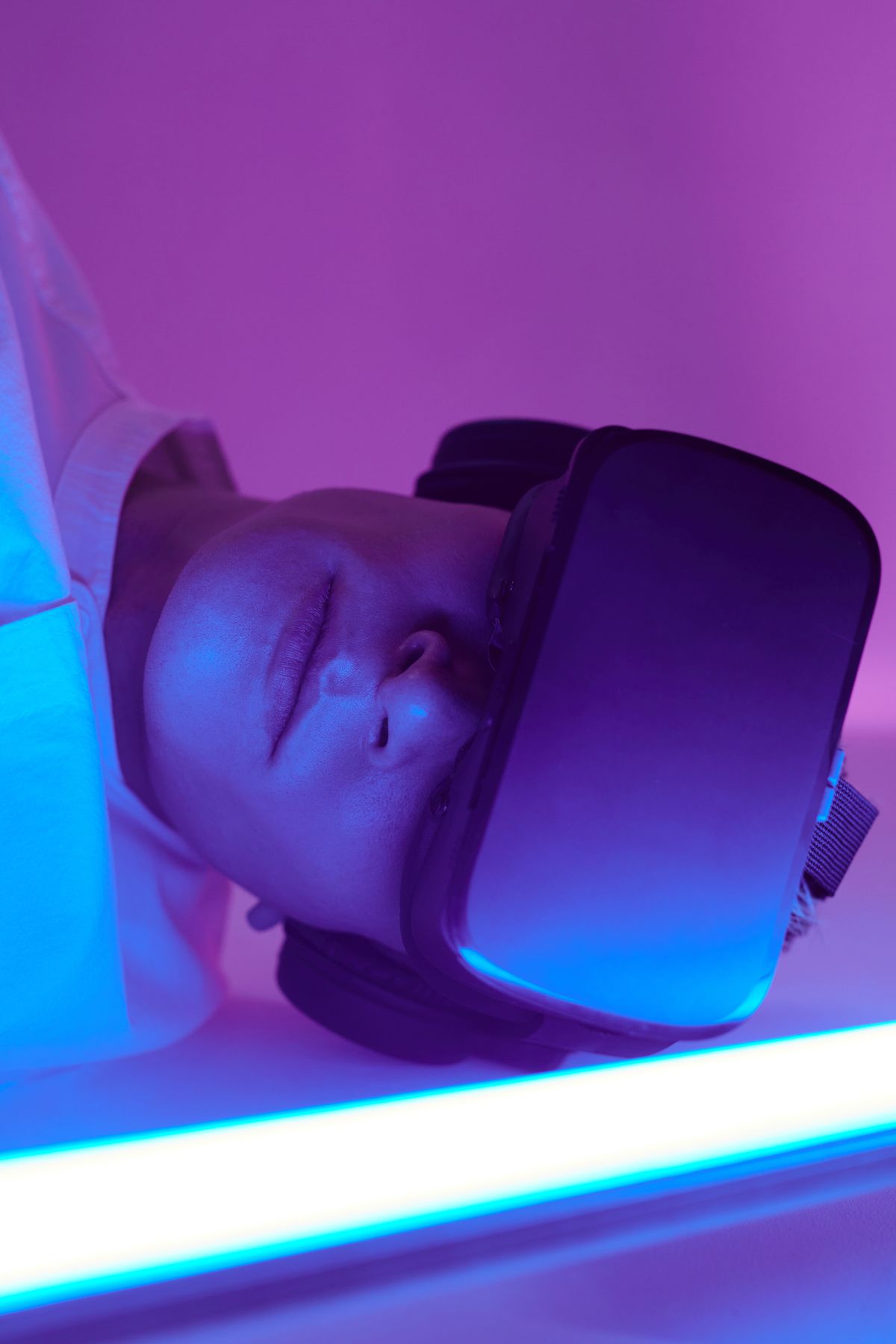
Photo by Michelangelo Buonarroti on Pexels
The FDA authorized Stryker's SportSuite Vision, the first surgical application for Apple's Vision Pro headset, which debuted in a hip arthroscopy case. It creates a surgical cockpit: imaging, vitals, guidance, and checklists placed spatially in the surgeon's view so their eyes stay on the patient instead of a monitor across the room. The promise is fewer head-turns and better focus; the requirement is that it assist without ever becoming a distraction or a single point of failure.
Picture the scene: a surgeon scrubs in, and instead of glancing up at a monitor bolted to the wall across the room, they slide on a headset. This month it stopped being science fiction. STAT reported that the FDA cleared Stryker's surgical cockpit built on Apple's Vision Pro, and Stryker introduced it as the first FDA-authorized surgical application for the Vision Pro, debuting in a real hip arthroscopy case. A consumer headset most people associate with watching movies on a plane is now cleared to sit on a surgeon's face while they operate on yours. I find that equal parts thrilling and worth slowing down to think about.
What actually got cleared
Let us be precise, because the details matter more than the headline. This is a specific, bounded clearance, not a free-for-all, and that is exactly how it should be.
Why cockpit is the perfect word
I love the word cockpit here, because it captures the whole idea in one image. A pilot does not fly by turning around to read gauges on the back wall. Everything they need floats in front of them, placed exactly where their attention already is. That is what this does for a surgeon. Tap through what lives in the view.
The unglamorous magic is in that last node. Everything else is a nicer way to see information. Failsafe is the thing that decides whether this is medicine or a demo. A surgeon in the middle of a case cannot pause to reboot, so the entire system has to be designed around the assumption that the headset will, at some point, misbehave.
The promise, and the thing that must never break
Every benefit of putting a computer on a surgeon's face comes paired with a rule it can never violate. This is the table I would tape to the wall of the product team building the next version.
Why I am excited and twitchy at the same time
The excited part is easy. Anyone who has watched a surgeon crane their neck to a screen and back, dozens of times a case, knows how dumb that dance is. Ending it is a real ergonomic and safety win, and doing it through the De Novo pathway, which is built for genuinely new device types, is the responsible way in. The twitchy part is that a headset is not a passive display. It sits between the surgeon and reality, and anything in that position had better be nearly perfect, because a wrong overlay is not a bug report, it is a patient. My honest read is that the first version will be most valuable in exactly the bounded, planned procedures it was cleared for, and that the hype will outrun the evidence for a while. That is fine. New categories should start narrow and earn their way wider.
So yes, a surgeon just put on a headset, and I think that is genuinely a milestone worth marking. Not because the headset is cool, though it is, but because it is the first real proof that spatial computing can clear the absurdly high bar of the operating room. The teams that win the next decade of this will be the ones who stay boringly obsessed with the failsafe while everyone else is filming the demo. In surgery, the least flashy requirement is always the one that matters most.
- The FDA authorized Stryker's SportSuite Vision, the first surgical app for Apple Vision Pro, via the De Novo pathway.
- It builds a surgical cockpit: imaging, vitals, guidance, and checklists placed in the surgeon's view, spatially.
- The core benefit is attention: eyes stay on the patient instead of turning to a monitor across the room.
- The hard requirement is failure-safety: if the headset dies, the surgery must continue fine without it.
- AR in the OR is a new place to put a surgeon's attention. Done right it is magic; done wrong it is a costly distraction.
Frequently asked
What did the FDA actually authorize?
Stryker's SportSuite Vision, described as the first FDA-authorized surgical application for Apple's Vision Pro headset, cleared through the De Novo pathway and debuted in a hip arthroscopy case at an academic medical center.
What does the headset show the surgeon?
A spatial cockpit: imaging, live patient data, surgical guidance, and checklists placed in the surgeon's field of view, so information sits where they are looking rather than on a distant monitor.
Why is this called a cockpit?
Because like a pilot's cockpit, it puts the instruments the operator needs in their line of sight, reducing the constant switching between the task and the readouts. The metaphor also carries the responsibility: a cockpit must never distract from flying the plane.
What is the main risk?
Attention and failure. The device must not become a distraction, must never show the wrong data, and must be built so the operation continues safely if the headset fails. It assists; it is not the surgery.
Is this the future of the OR?
It is a meaningful first step for spatial computing in surgery. Whether it becomes standard depends on comfort over long cases, rigorous evidence of benefit, and airtight failure-safety, not on the novelty of the headset.
Sources
Naveen Kumar
Healthcare engineering and product executive in Pittsburgh. 15+ years building AI-first patient access, a decade at Treatspace.