OpenEvidence and the Rise of the Doctor's Second Brain
A cited AI answer engine most patients have never heard of is now used daily by 40 percent of US doctors. Let us talk about what that actually means.

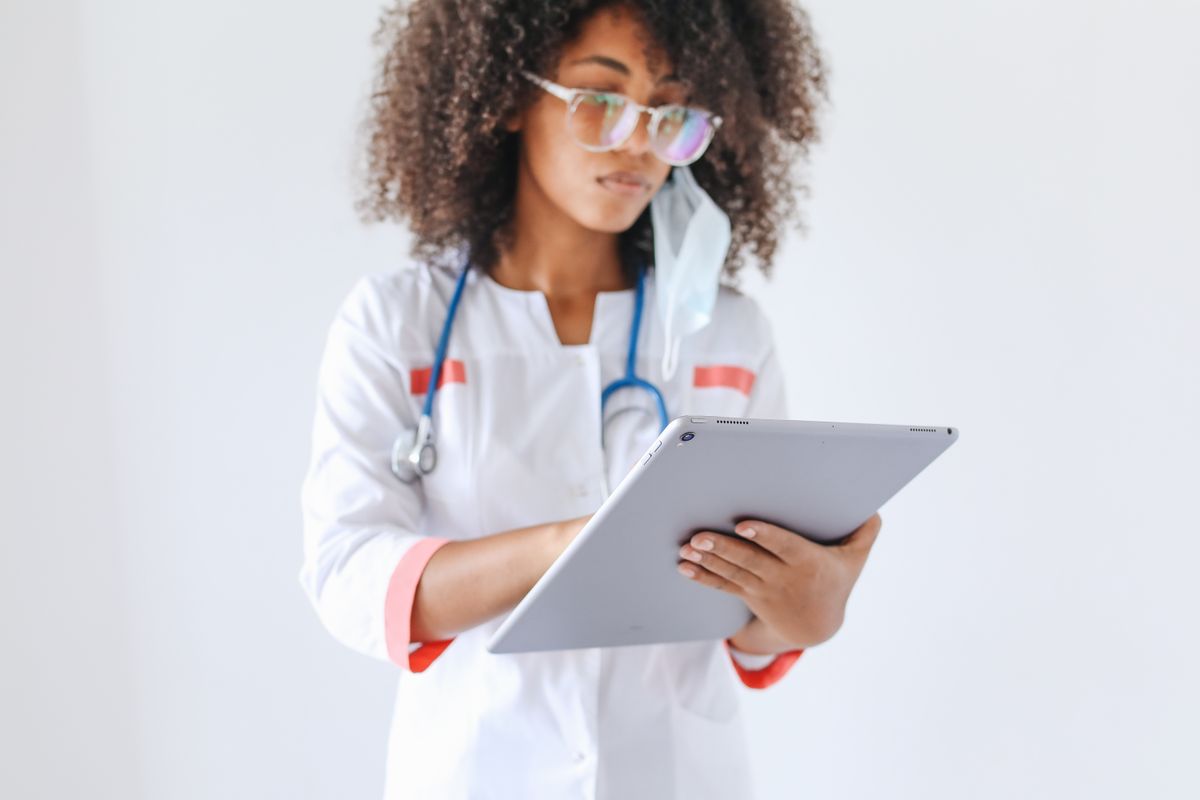
Photo by Polina Tankilevitch on Pexels
OpenEvidence is an AI clinical answer engine that gives physicians evidence-based, cited answers to medical questions in plain language. It is now used daily by roughly 40% of US physicians across more than 10,000 hospitals, and it is free to clinicians because it is funded by pharmaceutical advertising. In September 2026 it launched a new family of clinician models. Its rise makes evidence more accessible, but the ad-funded model and the concentration of medical reasoning in one external tool deserve scrutiny.
Somewhere right now, a doctor is standing outside an exam room, thumbing a question into their phone before they walk in. Not Googling. Not flipping through a dusty reference. Asking an AI called OpenEvidence, and trusting the answer enough to act on it. STAT reported this month that the company just launched a whole new family of models built for clinicians, and here is the stat that stopped me cold: roughly 40 percent of US physicians now use it every single day. Forty percent. Daily. A tool most patients have never heard of has quietly become the second brain of American medicine.
Wait, what is OpenEvidence?
If you have not seen it, picture ChatGPT that went to medical school and actually cites its sources. You ask a clinical question in plain English, and it hands back an answer grounded in the peer-reviewed literature with the references attached. That last part is the whole trick. Doctors do not want a confident vibe, they want a citation they can click and defend on rounds. Turns out that is a killer feature, and the usage numbers show it.
The growth curve that should make you sit up
I have watched a lot of health-tech adoption curves crawl. This is not that. Look at the monthly consultation volume and try to find the slow part.
That is roughly six times more clinical questions in a year, and it happened without a single patient marketing campaign. It spread the way real tools spread, one exhausted doctor telling another doctor, hey, this one actually works. When adoption moves like that, the thing has stopped being a nice-to-have and become part of how the work gets done.
So who is paying for your doctor's free superpower?
Here is the question I ask about any free tool that is suddenly everywhere, because free is never actually free. OpenEvidence costs clinicians nothing, and yet it is a 12 billion dollar company on about 100 million dollars of revenue. So where does the money come from? Pharma. When a doctor asks a question, the answer renders alongside pharmaceutical advertising aimed at exactly the person who writes the prescriptions, at ad rates that make consumer social media look like a garage sale. It is a three-sided deal, and it is worth seeing plainly.
I want to be fair here: an ad next to an answer is not the same as a biased answer, and the company draws a line between the evidence and the advertising. But if you have ever watched how subtly incentives bend a product over time, you know why that line is worth watching like a hawk. The most valuable real estate in medicine just became the moment a doctor is deciding what to do, and someone is now selling it.
Why I love this, and why it keeps me up a little
Let me say the genuinely good part loudly, because it is easy to be a cynic and cynics build nothing. Putting the entire medical literature one plain-English question away, with citations, is a real gift to a profession drowning in information it has no time to read. That is evidence-based medicine actually delivered at the point of care, which we have promised for twenty years and mostly failed at. I am thrilled it exists.
And here is the part that keeps me up. When a huge share of doctors reach for the same external brain, its blind spots become everyone's blind spots at once. If it is subtly wrong on a topic, subtly nudged by an advertiser, or simply down on a Tuesday, that is not one clinician having a bad day, it is a correlated wobble across the whole system. So use it, absolutely. But treat it like a brilliant colleague who is usually right and occasionally confidently wrong: click the citation, keep your own judgment in the loop, and never outsource the last ten percent of the decision. That last ten percent is still the job.
- OpenEvidence, an AI answer engine that cites its sources, is now used daily by about 40% of US physicians across 10,000+ hospitals.
- Consultations jumped from about 3M a month in late 2024 to over 20M by early 2026. It went from useful to load-bearing in a year.
- It is free to clinicians because pharma pays: ads target prescribers at CPMs far above consumer platforms.
- The upside is real: evidence on tap, with citations doctors can click, cutting cognitive load.
- The watch-outs: ad incentives could shape what surfaces, and 40% of doctors sharing one external brain is a correlated risk.
Frequently asked
What is OpenEvidence?
An AI clinical answer engine, sometimes called ChatGPT for doctors, that answers medical questions in plain language with citations to the peer-reviewed literature. It is built for clinical decision support, not patient-facing use.
How many doctors actually use it?
The company reports more than 757,000 verified physicians signed up and roughly 40% of US physicians using it daily across over 10,000 hospitals and medical centers.
If it is free, how does it make money?
Pharmaceutical advertising. Ads appear as answers generate, targeting high-value prescribers at CPM rates well above consumer social platforms. The company reported about $100M in revenue at a $12B valuation in early 2026.
Is it safe to rely on?
It is a decision-support tool, not a decision-maker. The citation trail is its best safety feature, letting a clinician verify. The subtler risks are advertising incentives and the systemic effect of many clinicians leaning on one external source.
How is this different from an EHR chatbot?
An EHR chatbot answers questions about a specific patient's record. OpenEvidence answers questions about the medical literature. Different data, different job, and increasingly used together.
Sources
Naveen Kumar
Healthcare engineering and product executive in Pittsburgh. 15+ years building AI-first patient access, a decade at Treatspace.